← Depression Things Nobody Talks About

Free coping tool

The Basic Needs Check-In

A practical guide for difficult days

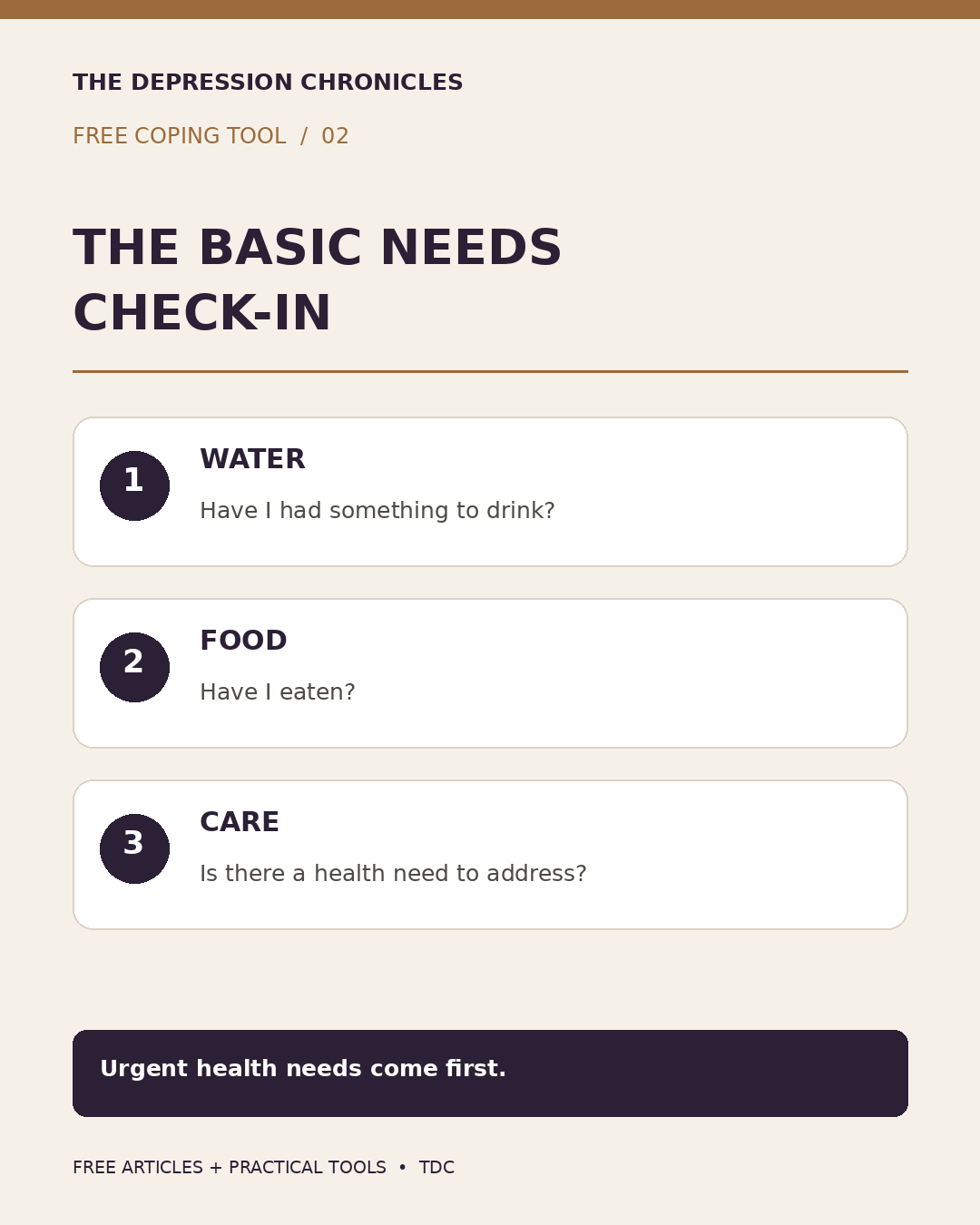
The Basic Needs Check-In. Check water, food and health care. Urgent health needs come first.
Visual summary. The complete tool is available as text below.

Use the checklist or write a few notes if it helps. Nothing you enter is sent to us.

A practical guide for difficult days

You do not have to complete a perfect routine. Start with what matters most.

1. Check your immediate needs

NeedMy situation today
Water
Food
Medication
Hygiene
Sleep
Medical or dental care

2. Choose the most important next action

Needs that affect immediate health and safety come first.

If you are very unwell, unable to maintain essential food or fluid intake, experiencing serious symptoms or unable to manage essential medication safely, seek appropriate healthcare assistance.

Otherwise, select one manageable action.

Food: Eat something simple that is available and safe to eat.

Water: Put a drink within reach and take a few sips.

Hygiene: Choose one useful step, such as washing your face, brushing your teeth or changing your clothes.

Medical care: Find the clinic number, send an appointment request or ask someone to help arrange care.

Environment: Clear a small space needed for eating, sleeping or moving safely.

3. Use the reduced-capacity option

Full taskSmaller possible step
Cook a mealEat a simple ready-to-eat option
Complete a shower routineWash essential areas
Clean the bedroomRemove rubbish from one surface
Arrange several appointmentsContact one healthcare provider
Do all the laundryFind one clean outfit

These are temporary adaptations, not requirements to ignore ongoing needs.

4. Ask for specific help

"I've been struggling with everyday care lately. Could you help me with [one task]? I would appreciate practical help rather than criticism."

5. End with one question

What do I need today that I have been overlooking?

You deserve access to care even when asking for it feels difficult.

About these resources

These articles and tools provide general mental-health education and practical support. They do not diagnose conditions or replace individual medical or mental-health care.

If symptoms are persistent, worsening or interfering significantly with daily life, consider speaking with a qualified healthcare professional. Seek urgent assistance for immediate health or safety concerns.

Explore further

The forthcoming book Depression Things Nobody Talks About will explore these experiences through longer stories, deeper reflections and additional practical exercises.

The articles and coping tools in this library will remain free.

The Depression Chronicles Changing Narratives. Healing Minds. Restoring Hope.