← Depression Things Nobody Talks About

Free coping tool

The One-Problem-At-A-Time Planner

When everything feels overdue

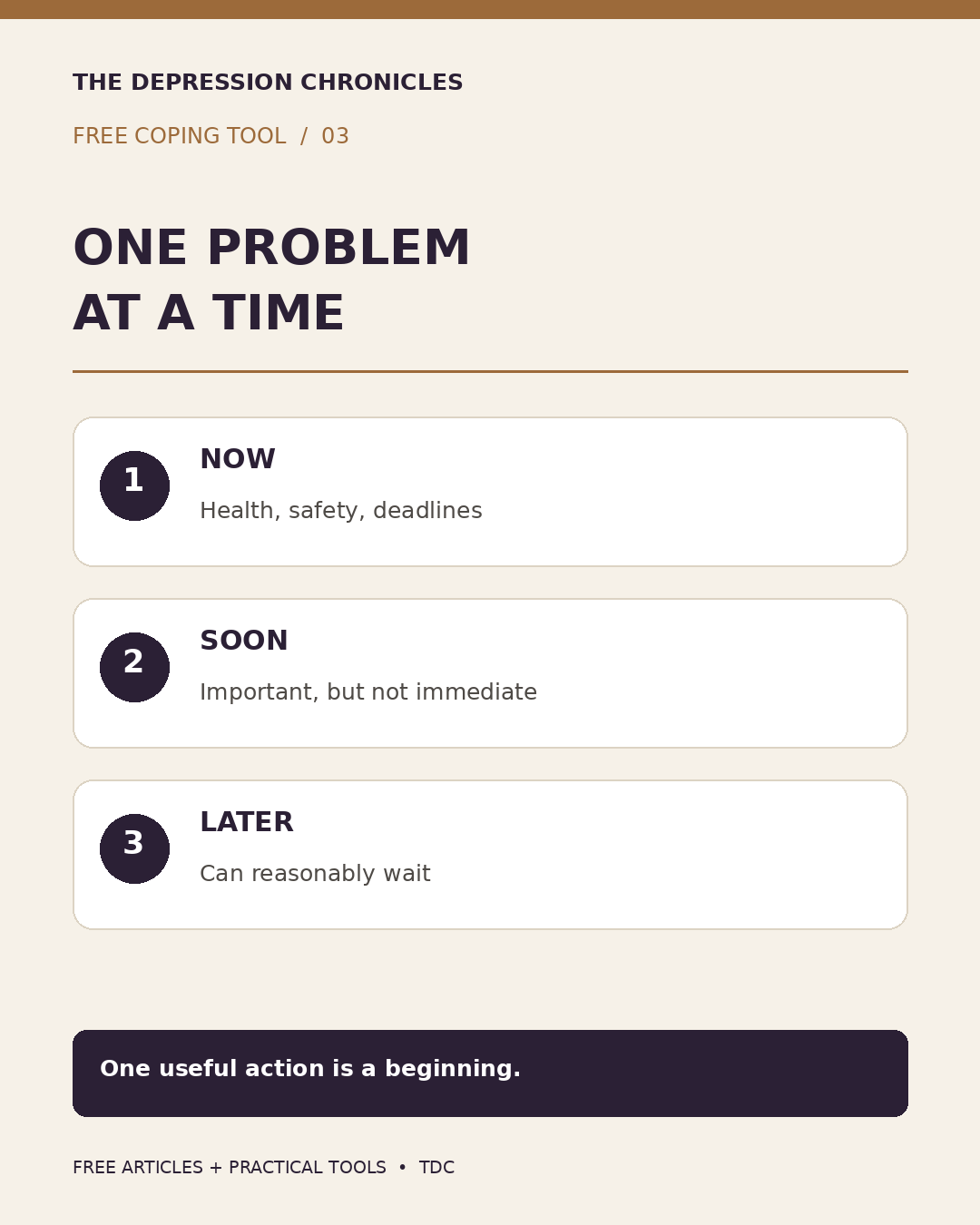
One Problem at a Time. Sort health, safety and deadlines into now, important tasks into soon, and other tasks into later. One useful action is a beginning.
Visual summary. The complete tool is available as text below.

Use the checklist or write a few notes if it helps. Nothing you enter is sent to us.

When everything feels overdue

1. Get the problems out of your head

Write up to three things currently worrying you.

If three is too many, write one.

2. Check urgency

For each problem, ask:

  • Is anyone's health or safety at risk?
  • Is there a deadline or consequence approaching?
  • Could waiting make this substantially worse?
  • Do I need professional or practical assistance?

Mark each problem:

NOW: Urgent or time-sensitive.

SOON: Important, but not immediately urgent.

LATER: Can reasonably wait.

If you are unsure about a potentially serious health, safety or legal matter, seek appropriate advice.

3. Choose one problem

The problem I will address first is:

4. Make the first action smaller

Instead of "Sort out my finances", try "Find the most recent bill."

Instead of "Fix my relationship", try "Write down what I need to discuss."

Instead of "Get my health together", try "Contact the clinic about one concern."

Instead of "Catch up on everything", try "Identify the nearest deadline."

My first action:

5. Decide what help would make a difference

6. Use this message if needed

"I'm dealing with something I've been putting off, and it's become difficult to manage. I want to address it now. Could we discuss the next step?"

Remember

Taking responsibility does not require humiliating yourself.

You can acknowledge a problem, ask for help and begin addressing it without turning the situation into a judgement of your worth.

About these resources

These articles and tools provide general mental-health education and practical support. They do not diagnose conditions or replace individual medical or mental-health care.

If symptoms are persistent, worsening or interfering significantly with daily life, consider speaking with a qualified healthcare professional. Seek urgent assistance for immediate health or safety concerns.

Explore further

The forthcoming book Depression Things Nobody Talks About will explore these experiences through longer stories, deeper reflections and additional practical exercises.

The articles and coping tools in this library will remain free.

The Depression Chronicles Changing Narratives. Healing Minds. Restoring Hope.